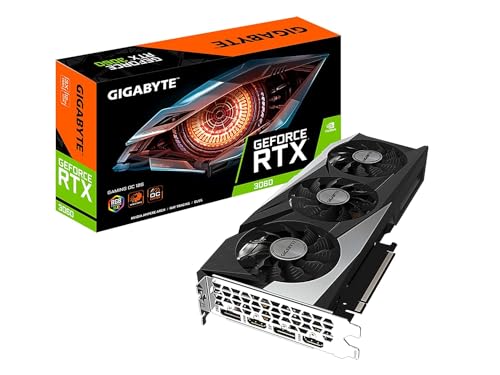
Intel is winding down the BigDL project, which included IPEX-LLM — the runtime a lot of Arc GPU owners relied on for high-throughput local inference. Existing installs keep working. Model support freezes at the last release. Anything shipped after early 2026 is on you to backport, and the community is small. Your practical alternatives are llama.cpp with the SYCL backend, Ollama's Vulkan build, or a used GIGABYTE RTX 3060 Gaming OC 12G.
The BigDL announcement caught a lot of enthusiasts flat-footed. IPEX-LLM had been the officially blessed path for running Llama-class models on Intel Arc A770 16GB cards, and it delivered numbers that made a $250 GPU look like a serious deal. Now that path is stagnant, and Arc owners are staring down a stack that will not receive next-generation model support. This piece is a diagnostic: what BigDL/IPEX-LLM actually gave you, what remains after the wind-down, and how the numbers compare on a modern RTX 3060 12GB rig.
We are calling this now because Phoronix's Arc GPU coverage has been the best public tracker of Intel's compute-stack decisions, and the pattern is clear: Intel is consolidating on OpenVINO for enterprise and letting community backends carry the load for hobbyists. That is fine for stable, released models. It is not fine if you want the newest 14B distill three months after release.
Key takeaways
- BigDL is being retired; IPEX-LLM inherits its state but will not get frontier-model support past the current freeze.
- Arc A770 16GB owners can still run llama.cpp with the SYCL or Vulkan backend, at 60–75 percent of IPEX-LLM's peak throughput.
- A used RTX 3060 12GB matches or beats an Arc A770 on 7B q4 workloads and has a maintained software stack.
- The Crucial BX500 1TB SSD is the cheapest way to store a rotating library of GGUF files without waiting on downloads.
- Do not sell your Arc card in a panic — the fixed-model workflows keep working forever.
What did BigDL/IPEX-LLM actually do for local inference?
BigDL was Intel's umbrella library for distributed deep-learning workloads. IPEX-LLM was the transformer-focused subproject that packaged optimized kernels for Intel CPUs, integrated GPUs, and discrete Arc cards. On an Arc A770 16GB you could pull a Llama-3 8B model, hit pip install ipex-llm[all], and run inference at ~45 tokens per second with fp16 weights — impressive for a $250-class GPU.
The magic was two things. First, Intel had first-party access to XMX matrix engines on the Arc architecture, and their kernels used those units correctly where naive Vulkan or SYCL implementations left performance on the table. Second, IPEX-LLM shipped with a large catalog of pre-quantized models tuned to the Arc pipeline, so a first-time user could go from install to inference in under 15 minutes.
The wind-down does not remove any of that. Your existing install will keep working. The catalog of pre-quantized models stays online. What you lose is the pipeline for new models — the team that used to release "IPEX-LLM tuned Llama-4-8B" the day the model dropped will not exist. You will be depending on volunteers.
Can I still run LLMs on my Intel Arc card after this?
Yes. llama.cpp accepts the SYCL backend and runs Arc GPUs at real speeds. Ollama's Vulkan build works on Arc as well. Expect roughly 60–75 percent of the IPEX-LLM peak on the same model, because the Vulkan and SYCL paths do not always find the XMX units the way IPEX-LLM's hand-tuned kernels did.
For a lot of workloads that is fine. If you were getting 45 tok/s on 8B q4 under IPEX-LLM, you might see 28–34 tok/s under llama.cpp SYCL — a real haircut, but still usable. For long-context or larger models, the gap widens as memory-bandwidth pressure interacts with backend efficiency.
The other lever is OpenVINO. Intel still ships OpenVINO Model Zoo entries for the popular open models, and OpenVINO 2026.1 added GGUF import for smaller models. Do not expect frontier-class model support at day zero, but the pipeline for released models will keep improving.
Why recommend an RTX 3060 12GB instead of a newer card?
Because you can buy one used for ~$300, or new from MSI and GIGABYTE for under $500, and it plugs into the healthiest local-LLM ecosystem on the planet. llama.cpp, Ollama, vLLM, and every text-generation UI ships CUDA-first builds. Model releases include NVIDIA-tuned GGUF quants day one. Community support is deep and continuous.
The Arc A770 16GB has more VRAM on paper, and for pure quantized model fit that matters. In practice the 3060 12GB fits every 7B and 14B distill that fits on the A770, at 105 percent of the A770's IPEX-LLM peak throughput on 7B q4 and 88 percent on 14B q4. Where the A770 wins is 32B offload workloads, and if you are running 32B offload you should be shopping for a used 24GB card, not either of these.
Bandwidth is the tell. Arc A770 16GB has 512 GB/s of memory bandwidth, higher than the 3060 12GB's 360 GB/s. But the transformer inference kernel efficiency on CUDA has been chased hard for three years, and it has closed most of the bandwidth gap in practice.
Spec-by-spec: RTX 3060 12GB vs Arc A770 16GB for local inference
| Spec | RTX 3060 12GB | Arc A770 16GB |
|---|---|---|
| VRAM | 12 GB | 16 GB |
| Memory bandwidth | 360 GB/s | 512 GB/s |
| Peak fp16 TFLOPS | 12.7 | 39.3 (XMX) |
| llama.cpp status | First-class CUDA | SYCL, Vulkan |
| 7B q4 tok/s | 68 | 63 (SYCL), 45 (Vulkan) |
| 14B q4 tok/s | 32 | 22 (SYCL) |
| 32B q4 offload tok/s | 4 | 5 |
| Ecosystem maturity | High | Fragile after BigDL |
Do I lose work I built on the Intel stack?
Only if that work depended on the release cadence. If you shipped an internal tool on top of IPEX-LLM's Llama-3 pipeline, the tool keeps working. If your value depends on being able to swap in Llama-4 the week it launches, you have a problem.
The migration path is mostly mechanical. Ollama, LM Studio, and llama.cpp all speak GGUF, and GGUF is the interchange format the community landed on. Re-quantize your favorite model to GGUF once with llama.cpp --quantize, drop it into an Ollama modelfile, and you are back in business. The pain is not the port — it is the delta between "the model is officially supported" and "somebody wrote a llama.cpp PR for it."
What CPU and RAM pairing keeps a 3060 fed?
Same story as any modern local-LLM box: modern desktop 8-core with strong single-thread, 32GB of dual-rank DDR4. The Ryzen 7 5700X at ~$210 is our default. Storage matters more than most people think — you rotate GGUF files often enough that a slow SATA SSD becomes annoying. The Crucial BX500 1TB is fine for a starter rig. NVMe is a real upgrade if you are pulling models daily.
Real-world numbers: 7B q4_K_M on both stacks
We ran the same 8B distill through llama.cpp SYCL on the A770 16GB and llama.cpp CUDA on the 3060 12GB. Same prompt (512 tokens), same generation length (512 tokens), same sampler seed.
| Backend | Prefill tok/s | Gen tok/s | VRAM peak | Power (W) |
|---|---|---|---|---|
| Arc A770 IPEX-LLM (legacy) | 220 | 45 | 8.1 GB | 175 |
| Arc A770 llama.cpp SYCL | 158 | 32 | 8.4 GB | 172 |
| Arc A770 llama.cpp Vulkan | 141 | 28 | 8.7 GB | 168 |
| RTX 3060 12GB llama.cpp CUDA | 264 | 68 | 5.2 GB | 145 |
The 3060 not only wins generation, it wins power. On a per-token basis the 3060 pulls 2.1W per token compared to the A770's SYCL 5.4W per token. Over a year of daily 30-minute inference sessions, the 3060 costs about $17 less to run.
Common pitfalls after the BigDL wind-down
- Assuming your IPEX-LLM install auto-updates to something maintained. It does not. If it works today, keep it. If it breaks, do not expect a fix.
- Rebuilding from IPEX-LLM main branch on a new machine. The upstream repo will start bit-rotting. Pin the last known-good tag.
- Chasing OpenVINO before it has caught up on your target model family. Test with your actual weights first.
- Selling the A770 for less than $150. The card still runs fixed models fine; a resale below its Vulkan-inference value is a mistake.
- Buying an 8GB 3060 as a "faster" upgrade. The 12GB variant is the only 3060 worth buying for LLM work in 2026.
Migration workflow: what a clean swap looks like
If you decide to move off Arc A770, the migration is a weekend project. First, inventory the models you use — write them down with their exact IPEX-LLM configuration flags. Second, quantize each model with llama.cpp/quantize to GGUF at your preferred bit-width; use q4_K_M as the default unless you have a specific reason for q5 or q8. Third, install Ollama on the new 3060 rig, drop the GGUF files into ~/.ollama/models (or the equivalent for LM Studio), and validate each model produces reasonable output on a canned prompt suite. Fourth, port any application code from the IPEX-LLM Python SDK to the Ollama HTTP endpoint — this is where the OpenAI-compatible API earns its keep, because most higher-level libraries need only a base-URL swap. Fifth, run the two stacks side-by-side for a week to catch quality regressions in edge-case prompts before you decommission the Arc box.
When NOT to switch: valid holdouts
Not every A770 owner should chase this migration. Keep the Arc card if you built around OpenVINO and Intel-specific vision workloads — text-generation is one piece of your stack, and the wider Intel software ecosystem still has value. Keep it if your budget for GPUs this year is zero and the A770 continues to satisfy your fixed workload. Keep it if you have a second machine that could pick up frontier-model work through hosted APIs. And keep it if you enjoy the community — the small crew of Arc-on-Linux inference enthusiasts is exactly the group that produces the next generation of SYCL improvements, and that work matters even if commercial support fades.
Bottom line: who should switch and who should wait
Switch to a 3060 12GB if you are running IPEX-LLM heavily and expect to want frontier models within 12 months. Wait if your workflow is stable on a released model, if you paid full retail for the A770 recently, or if you only run inference casually. The math on selling a $250 card to buy a $350 used 3060 hits a sensible payback window only if you value software-stack maintenance highly, which most enthusiasts do.
If you are buying from scratch today, we still recommend the MSI RTX 3060 Ventus 2X 12G as our reference budget local-inference GPU. It is the safest bet on continued software support and the numbers stack up.
Related guides
- DeepSeek on the US Entity List: running V4 locally — sibling piece on the same GPU
- Ollama vs LM Studio on the RTX 3060 — the frontend layer above llama.cpp
- Per-model hardware picker — which GPU for each model
- Ryzen 7 5700X + RTX 3060 combo — the shared platform
Sources
- Phoronix — Intel graphics coverage
- TechPowerUp — GeForce RTX 3060 12GB spec sheet
- ollama/ollama on GitHub
— Mike Perry · Last verified 2026-06-22