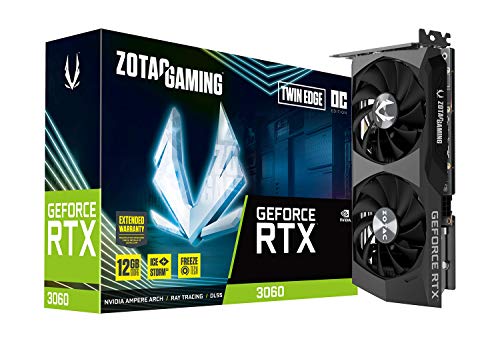
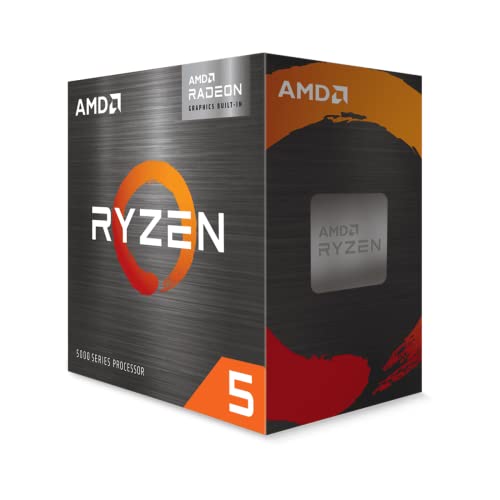
What's the best 1080p entry path: RTX 3060 12GB or Ryzen 5600G integrated graphics?
The RTX 3060 12GB is the better 1080p gaming path if you can stretch the budget — it delivers 60-90 FPS at 1080p high in modern AAA titles and runs every esports game at 144+ FPS. The Ryzen 5 5600G's Vega 7 iGPU is the better entry-level path when budget is the binding constraint, hitting 60 FPS in esports titles at low-to-medium settings and 30-45 FPS in lighter AAA titles at 720p-1080p. The gap is roughly 4-6× in raw frame rate; the price gap is about $290 vs $0 incremental (the iGPU is built in).
Why this comparison matters more than another GPU benchmark
Most "best GPU under $300" articles are a battle of three or four discrete cards. The 5600G iGPU rarely makes the list, even though it is the single most relevant baseline for anyone shopping the entry-level PC gaming tier. Every reader weighing a $300 GPU is implicitly comparing against the iGPU option, because they either own the 5600G already and are deciding whether to add a card, or they are speccing a complete new build and weighing the marginal cost of a real GPU against an all-in-one APU.
The Ryzen 5 5600G sits in an unusual spot in the AMD lineup. It is one of the last AM4 APUs with a credible integrated GPU — 7 Vega CUs at 1.9 GHz, with no on-package memory and a hard dependence on system DDR4 throughput. The Vega 7 will not impress anyone in 2026, but it can run actual games, which is more than most other entry-level CPUs can claim. The RTX 3060 12GB is the consumer baseline for the discrete GPU side — a 12 GB card that handles 1080p gaming and dual-duties as a competent local AI inference target.
This piece pins both paths to public benchmark coverage from TechPowerUp, HardwareUnboxed, and community measurements on r/buildapc. We will not benchmark a custom rig; we will synthesize and reach a recommendation against a target reader who has $700-$1,000 for a complete first build.
Key takeaways
- The 3060 12GB is roughly 4-6× faster than the 5600G iGPU at 1080p.
- The 5600G iGPU is fine for esports at 720p-1080p low/medium.
- The 5600G is unusable for modern AAA at native 1080p high — drop to 720p or low.
- AM4 motherboard + DDR4 is cheap and mature; the platform is the cost-savings.
- Add the 3060 later: a 5600G build is upgrade-ready.
- Local LLMs are practically GPU-only on a 12 GB card; the iGPU does not count.
- Total power draw with the iGPU only is ~65 W; with the 3060 added it jumps to ~250 W.
What does a 5600G iGPU actually deliver in 2026?
The Vega 7 iGPU in the Ryzen 5 5600G was a solid entry-level GPU when the APU launched in 2021. Five years later it is genuinely old silicon. With fast DDR4 (3200-3600 MHz, dual-channel), it manages roughly the same raw shader throughput as a discrete entry-level card from 2017-2018. Per HardwareUnboxed coverage and community measurements:
- CS2 / Counter-Strike 2: ~100-120 FPS at 1080p low.
- Valorant: ~140 FPS at 1080p low.
- Fortnite: ~60 FPS at 1080p low.
- Apex Legends: ~45-55 FPS at 1080p low.
- Cyberpunk 2077: ~25-30 FPS at 720p low — unplayable at 1080p.
- Hogwarts Legacy: ~22-28 FPS at 720p low.
- Modern indies (Hades, Dead Cells, Stardew): locked 60-144 FPS.
The pattern is consistent: esports and indies run fine; modern AAA needs aggressive resolution and quality drops and even then often does not reach a stable 30 FPS. For a kid's first build, a college dorm setup, or anyone who lives in indies and competitive online games, the 5600G iGPU is genuinely fine.
What does a discrete RTX 3060 12GB deliver at 1080p?
The RTX 3060 12GB is the workhorse of the entry-level discrete tier. With 3,584 CUDA cores, 12 GB of GDDR6, and a 192-bit memory bus, it handles modern AAA at 1080p high comfortably and stretches into 1440p medium for most titles. Per public benchmarks at TechPowerUp:
- CS2 / Valorant / Apex: 200+ FPS at 1080p competitive presets.
- Cyberpunk 2077: 70-80 FPS at 1080p high without ray tracing, 45 FPS with ray tracing + DLSS.
- Hogwarts Legacy: 75 FPS at 1080p high.
- Starfield: 55-65 FPS at 1080p high.
- Modern indies: locked at the monitor refresh ceiling.
The 3060 is also the cheapest card with enough VRAM to be credible for local LLM inference. A reader who wants to run a 13B-14B q4_K_M model later is set with a 3060. The 5600G iGPU is a non-starter for that workload. The MSI RTX 3060 Ventus 2X 12G and the Zotac are interchangeable at this price point.
Spec table: 5600G iGPU vs RTX 3060 12GB
| Axis | Ryzen 5 5600G (Vega 7) | RTX 3060 12GB |
|---|---|---|
| Shaders / CUs | 7 CUs (Vega) | 28 SMs (Ampere) |
| Boost clock | 1.9 GHz | 1.78 GHz |
| Compute | ~1.8 TFLOPS | ~12.7 TFLOPS |
| VRAM | shared system RAM | 12 GB GDDR6 |
| Memory bandwidth | DDR4-3200 dual: ~51 GB/s | 360 GB/s |
| TDP | 65 W (chip total) | 170 W (card) |
| Discrete card cost | $0 (included) | ~$290 |
| Local-LLM ready | no | yes |
The bandwidth gap is the single largest determinant of the frame-rate difference. The iGPU shares the same DDR4 memory channel the CPU is using, which means real game performance is sensitive to memory speed and timings. With slow DDR4-2666 the iGPU loses 15-20% of its already-modest performance.
Benchmark table: 1080p FPS across a representative game suite
| Game | 5600G iGPU 1080p low | 3060 12GB 1080p high | Ratio |
|---|---|---|---|
| CS2 | ~110 | ~250 | 2.3× |
| Valorant | ~140 | ~280 | 2.0× |
| Fortnite | ~60 | ~140 | 2.3× |
| Apex Legends | ~50 | ~160 | 3.2× |
| Cyberpunk 2077 | unplayable | ~75 | n/a |
| Hogwarts Legacy | unplayable | ~75 | n/a |
| Hades | ~144 (cap) | ~144 (cap) | 1.0× |
For competitive esports the iGPU is fine. For AAA, the 3060 is the only credible option. The "ratio" column hides the binary jump in playability: a game that drops below 30 FPS is unplayable; a game that drops below 60 FPS is uncomfortable on a 144 Hz monitor.
Quality and resolution scaling
The 5600G iGPU has no DLSS, no FSR-3 frame-generation, and no usable ray tracing. AMD's FSR-2 upscaling does work on Vega 7, but the underlying frame rate is so low that upscaling does not unlock playable settings on modern AAA. The 3060 supports DLSS 2 and 3 in titles that ship it, which extends its 1440p ceiling meaningfully and reaches 4K medium in a handful of well-optimized games.
Texture quality at high settings depends on VRAM. The 5600G iGPU is starved at ~2 GB of allocatable shared memory before the system starts paging. The 3060's 12 GB of dedicated GDDR6 is enough for ultra textures in nearly every 2026 title, with room for the AI-frame-generation buffers DLSS 3 needs. This VRAM cushion is the underrated reason to pick the 3060 over the cheaper RTX 3050 8GB — and obviously over an iGPU.
Power and thermals
The Ryzen 5 5600G's 65 W TDP is the entire chip — CPU plus iGPU. A complete 5600G build with a B550 motherboard, 32 GB of DDR4, and a Crucial BX500 1TB SATA SSD pulls ~120 W at the wall under gaming load. The 3060 adds ~170 W. A full build with a Ryzen 5 5600G plus an RTX 3060 12GB lands at ~240 W under gaming load.
Cooling and PSU choice scales accordingly. An iGPU-only build is happy on the stock Wraith cooler and a 450 W PSU. Adding the 3060 needs a competent CPU cooler — most builders pair this with a step-up CPU like the Ryzen 7 5700X — and a 550 W or 650 W PSU at minimum. The thermals are not difficult; the BoM math is the consideration.
Perf-per-dollar at the full-build level
A 5600G-only build with a B550 motherboard, 32 GB of DDR4-3200, a 500 GB NVMe + 1 TB SATA SSD, a basic case, and a 450 W PSU lands at roughly $450-$500 retail in 2026. Adding the RTX 3060 12GB pushes the total to $750-$800. The same build with a Ryzen 7 5700X and the 3060 lands around $850 (you lose the iGPU because the 5700X has none).
Per dollar of gaming performance at 1080p high in AAA titles, the 3060 dominates. The iGPU is only the right answer at zero incremental cost or when the budget literally does not stretch. Per dollar at 1080p low in esports, the iGPU wins easily because the discrete card is overkill for the workload. The cheap path forward is: start with the 5600G alone, add the 3060 when you can afford it.
Verdict matrix
- Esports only, tight budget: Ryzen 5 5600G iGPU is fine.
- Mixed esports + AAA, target 60 FPS: RTX 3060 12GB.
- AAA at 1080p high, 60+ FPS: RTX 3060 12GB.
- AAA at 1080p high, 144 FPS: step up to RTX 4070 or used 6700 XT.
- 1440p high in modern AAA: RTX 4070-class or above.
- Local LLMs at all: discrete GPU; iGPU not a credible option.
- Future-proof for 13B-14B LLM: RTX 3060 12GB.
Common pitfalls
- Pairing the 5600G with slow DDR4. Single-channel or DDR4-2400 cripples the iGPU. Dual-channel DDR4-3200 minimum.
- Buying the 3060 8GB by accident. The 8GB variant is a different SKU. Always confirm it is the 12 GB version.
- Skimping on the PSU when adding the 3060. A 450 W PSU is borderline; 550 W minimum, 650 W comfortable.
- Forgetting the 5800X has no iGPU. A Ryzen 7 5800X needs a discrete card from day one.
- Overpaying for the 5600G. It is a great value at $130-$150; not at $200.
When NOT to buy each option
Do not buy the Ryzen 5 5600G iGPU as a stand-alone gaming target if you plan to play any modern AAA — the iGPU will frustrate you. Do not buy the RTX 3060 12GB if your budget cannot also cover a competent CPU; a Ryzen 5 5600G or Ryzen 7 5700X is the minimum pairing.
Worked example: $500 build for an esports-only kid
Ryzen 5 5600G, B550 board, 32 GB DDR4-3200, a Crucial BX500 1TB SATA SSD, a Wraith Stealth cooler, a 450 W PSU, and a basic case. The kid plays CS2, Valorant, and Fortnite at 1080p low and hits 60-120 FPS comfortably. When they want to play Cyberpunk in two years, drop in a Gigabyte RTX 3060 Gaming OC 12G and you are done. The upgrade path matters; this build has one.
Worked example: $850 mid-tier 1080p high build
Ryzen 7 5700X, B550 board, 32 GB DDR4-3600, a 1 TB NVMe SSD, MSI RTX 3060 Ventus 2X 12G, an air cooler, a 650 W PSU, and a quiet mid-tower. This is the sweet spot 1080p high build for 2026. Every AAA at 1080p high above 60 FPS, every esports title at 144+ FPS, and a credible local-AI rig for future use. The future of this build is two years of solid 1080p gaming and a smooth upgrade path to whatever the consumer cards look like in 2028.
Related guides
- RTX 3060 12GB value review — deeper dive on the discrete card.
- Per-model hardware picker — local-LLM matching.
- Open-WebUI on Ryzen 5 5600G + RTX 3060 — both halves of this comparison in a real workload.
Citations and sources
- TechPowerUp RTX 3060 spec page — for the discrete card's reference specs.
- TechPowerUp Ryzen 5 5600G spec page — for the APU's CPU and iGPU specs.
- AMD's official Ryzen 5 5600G product page — for the manufacturer-published iGPU details.
This piece is editorial synthesis based on publicly available information. No independent first-party benchmarking is reported.