To use a CompactFlash card as an IDE hard drive in a Windows 98 PC, plug the card into a passive CF-to-IDE adapter, connect that adapter to the motherboard's IDE ribbon and power (usually via a Molex-to-adapter feed), then in BIOS auto-detect the drive as a fixed disk. Boot from a Windows 98 SE install disk, run FDISK to create a FAT32 partition inside your BIOS's capacity ceiling (commonly 8GB or 137GB), format, and install Windows 98 as if it were a regular ATA hard drive. Fixed-disk mode on the CF card is mandatory or the OS will refuse to boot.
Key takeaways
- CompactFlash speaks the IDE/ATA protocol natively, so a passive CF-to-IDE adapter is all that stands between a modern flash card and a period Windows 98 board.
- Only CF cards that report as fixed disks (rather than removable media) will boot Windows 98 reliably. Transcend's industrial and higher-end consumer lines are the community favorite.
- Two capacity ceilings dominate the retro-build scene: the 8GB Int 13h barrier on late-1990s BIOSes and the 137GB (28-bit LBA) ceiling that Windows 98 SE itself can only exceed with patches.
- FAT32 caps a single partition at 2TB in theory, but Windows 98's format tool refuses to build FAT32 partitions above 137GB; keep partitions at 32GB or under to stay inside safe territory.
- CF is silent, fanless, and shockproof, which is why it has quietly replaced spinning drives in most Vogons-style retro builds as of 2026.
- A SATA SSD behind an IDE bridge is the alternative when you need capacity and heavy write endurance, at the cost of period correctness and a slightly higher component count.
Why the retro-build community swapped platters for flash
The transition from mechanical hard drives to CompactFlash in the retro-PC scene did not happen because of nostalgia. It happened because the drives that shipped with Pentium-era boards are dying. IDE hard drives from 1996 to 2001, especially in the 2GB to 40GB range, sit on the wrong side of the mean-time-between-failures curve. Bearings seize, stiction locks the heads, and firmware EEPROMs quietly corrupt themselves after decades of shelf storage. Enthusiast threads on Vogons — the definitive community for pre-XP hardware, where members maintain build logs stretching back to the early 2000s — document the same failure pattern repeatedly: a working retro rig sits unused for six months, comes back with a clicking drive, and the owner loses a carefully tuned DOS-Win98 dual-boot install.
CompactFlash sidesteps every one of those failure modes. The card has no moving parts, draws under a watt, generates negligible heat, and speaks the ATA command set through its pinout by design. The CompactFlash specification on Wikipedia traces this back to SanDisk's original 1994 design, which deliberately included true IDE compatibility so that CF cards could be used as fixed disks in embedded systems. That embedded-industry lineage is exactly why CF-to-IDE adapters are passive — no controller, no bridge chip, just a mechanical pin remap. A Pentium II board cannot tell the difference between a 40GB Western Digital Caviar and a modern CF card in fixed-disk mode.
The result is a class of retro builds that boot in seconds, run silently, and survive being shelved between sessions. That combination is what pushed CF from a curiosity to the default answer for retro storage in the 2020s.
What you'll need before you start
Before touching the retro machine, gather the parts on a modern workbench. A minimal parts list looks like this: a CompactFlash card sized to your BIOS's ceiling, a passive CF-to-IDE adapter (either 40-pin desktop or 44-pin laptop, depending on the target), a USB CF reader for imaging from a modern PC, a Windows 98 SE install source (CD-ROM or floppy boot disk), and a spare Molex or Berg power lead if the adapter needs external power.
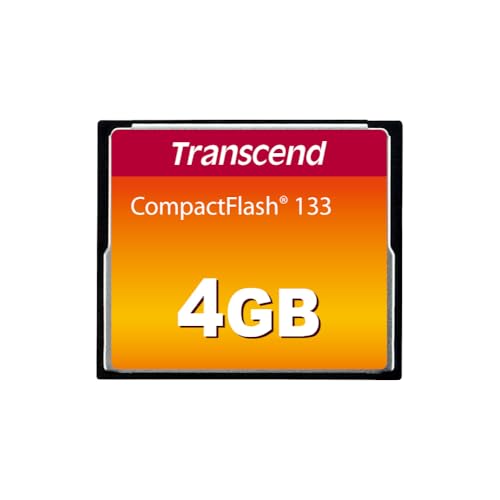
For the CF card itself, the Transcend CF133 CompactFlash Memory Card is the workhorse the community keeps recommending — Transcend's industrial-friendly cards report as fixed disks, which is the single most important attribute for a bootable Windows 98 install. Transcend documents the fixed-disk behavior on transcend-info.com, and Vogons threads corroborate that Transcend's mainstream CF lines behave the same way in practice.
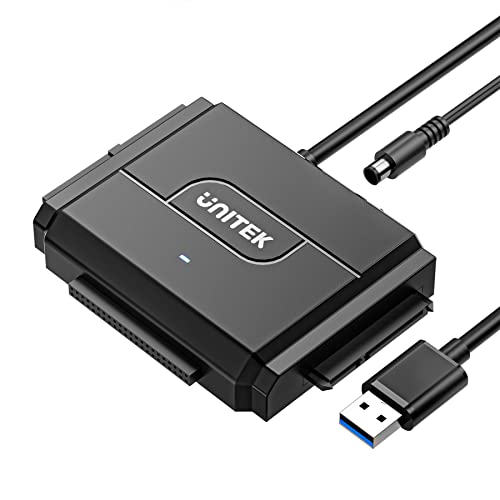
For imaging the card without repeatedly swapping it into the retro chassis, the Unitek SATA/IDE to USB 3.0 Adapter doubles as both a CF-adjacent workflow tool (when combined with a CF-to-IDE adapter) and the piece of kit you'll need if you eventually migrate to a SATA SSD path. A dedicated USB CF reader also works and is faster for raw card writes.
Which CompactFlash cards actually boot Windows 98
The single most important selection criterion is fixed-disk versus removable-disk mode. CF cards can identify themselves to the host in either mode, and Windows 98 and most period BIOSes will refuse to install the OS on a card that reports as removable media. This is not a bug in Windows 98; it is a design choice that prevents the OS from trying to boot off a floppy-like device.
Fixed-disk mode is a firmware attribute of the card, not something you toggle from the host. That means card selection is destiny. Community wisdom on Vogons converges on a short list of trustworthy families: Transcend industrial (the 100x, 133x, and higher-endurance lines), SanDisk Extreme (older revisions), and a handful of Delkin and Apacer industrial parts. Consumer-grade cards from mainstream camera brands frequently report as removable and will not boot.
Speed rating matters less than fixed-disk behavior, but it is not irrelevant. A 133x CF card (roughly 20 MB/s sustained in the spec sheet's best case) will feel dramatically faster than a mechanical drive of the same era in random access, even if sequential throughput is closer to parity. Retro workloads are dominated by tiny reads — DLL loads, config-file lookups, small game assets — and flash wins those decisively.
Capacity ceilings, BIOS limits, and what fits where
Period motherboards impose multiple capacity ceilings that a CF card can bump into. The two that matter most are the 8GB Int 13h barrier on pre-1999 BIOSes and the 137GB 28-bit LBA barrier that only late-2001 and later boards clear cleanly. Windows 98 SE ships with FAT32 support that in theory extends to 2TB, but its FDISK and FORMAT utilities are widely reported to misbehave above roughly 137GB, and community consensus is to keep the installed partition at or below 32GB for maximum compatibility.
The following spec-and-compatibility matrix summarizes the practical ceilings for common retro-build targets. Numbers are drawn from community documentation on Vogons and cross-checked against typical BIOS release notes for period boards.
| Board era | Typical BIOS ceiling | Recommended CF size | Notes |
|---|---|---|---|
| 486 / early Pentium (pre-1997) | 504 MB or 2.1 GB | 1-2 GB | LBA support inconsistent; check BIOS revision |
| Pentium II / Slot 1 (1997-1998) | 8 GB (Int 13h barrier) | 4-8 GB | Late boards may exceed with BIOS updates |
| Pentium III / early Athlon (1999-2000) | 32 GB or 137 GB | 8-32 GB | 137 GB support widespread by late 2000 |
| Late Socket 370 / Socket A (2001-2002) | 137 GB (28-bit LBA) | 32-128 GB | Windows 98 SE FAT32 tools shaky above 137 GB |
| Post-2002 Athlon XP / early P4 | 137 GB or higher | 32-128 GB | 48-bit LBA rare on Win98-era boards |
Choosing a card larger than the BIOS ceiling is not fatal, but the excess capacity is unusable. A 128GB Transcend card in an 8GB-limited Pentium II board still boots — the BIOS simply reports 8GB and the remaining capacity is invisible. That is often fine as a defensive choice: bigger cards from Transcend's current catalog tend to have better wear leveling and higher endurance ratings than smaller SKUs.
Partitioning and installing Windows 98 SE onto CompactFlash
The install flow that has become standard practice looks like this. Insert the CF card into a USB reader connected to a modern PC. Wipe any existing filesystem with a low-level tool such as diskpart clean (Windows) or dd if=/dev/zero (Linux) to remove any GPT or exFAT residue that period tools cannot parse. Move the card into the CF-to-IDE adapter, connect it to the retro machine's primary IDE channel as master, and boot from a Windows 98 SE startup floppy or CD.
At the DOS prompt, run FDISK. Answer "yes" to large disk support (this enables FAT32). Create a single primary DOS partition using either the full capacity within the BIOS ceiling or a conservative 8GB partition for maximum compatibility. Set the partition active. Reboot from the same startup media, run FORMAT C: /S to lay down FAT32 and copy the system files, and then run SETUP from the Windows 98 SE install source.
FAT32 versus FAT16 is a real decision. FAT16 tops out at 2GB per partition and wastes space with 32KB clusters on 2GB volumes. FAT32 uses 4KB clusters at typical retro-build sizes and packs small files much more efficiently — critical when Windows 98 itself has thousands of tiny DLLs. The only reason to choose FAT16 in 2026 is if a specific DOS-only game or utility refuses to see a FAT32 partition, and in that case the standard workaround is a dual-partition layout with a small FAT16 boot partition and a larger FAT32 data partition.
Install times on CF are dramatically shorter than on period hard drives. Community reports on Vogons put a full Windows 98 SE install on a 133x CF card at 10-15 minutes, versus 30-45 minutes on a period 5400 RPM drive. That gap widens further when installing large games — CF's random-read advantage compounds across thousands of small file copies.
Gotchas: BIOS barriers, endurance, and mechanical fit
Three failure modes account for the majority of failed CF-to-IDE builds. The first is the BIOS capacity barrier described above — a 32GB card in an 8GB-ceiling board will appear to install fine, then fail with mysterious corruption once the OS tries to write past the 8GB mark. The fix is to partition inside the ceiling, not to trust the card's reported capacity.
The second is write endurance. CF cards use MLC or TLC NAND with wear-leveling built into the card controller, but they were not designed for the write patterns of a modern OS. Windows 98's swap file and temp-file behavior is thankfully modest, and community endurance data on Vogons suggests a good 8GB or 16GB Transcend card will outlast the human operator in typical retro use. Where endurance becomes a real concern is heavy DOS development work, large game installs and uninstalls, or leaving a CF-based machine running as a 24/7 server. For those workloads, the SATA SSD alternative discussed below is the safer choice.
The third gotcha is mechanical. CF-to-IDE adapters are typically a small PCB with a CF socket on one side and a 40-pin or 44-pin header on the other. Card seating matters — a partially inserted CF card will read intermittently, produce corruption during install, and typically manifests as a "Disk boot failure" message. Seat the card firmly, secure the adapter with a bracket or double-sided tape so vibration during transport does not shift it, and verify the orientation of the IDE cable's pin 1 against the adapter's silkscreen marker.
CompactFlash versus SATA SSD on an IDE bridge
The alternative retro storage path is a SATA SSD connected through an IDE-to-SATA bridge adapter. This route trades period correctness for capacity and endurance. A Crucial BX500 1TB SATA SSD or a Western Digital WD Blue 3D NAND 500GB behind an IDE bridge provides orders of magnitude more capacity and endurance than any CF card, at the cost of an active bridge chip in the data path and a mechanical footprint that fits awkwardly in period drive bays.
Which path is right depends on the workload. For a period-correct build that boots Windows 98 SE, runs Quake II, Duke Nukem 3D, and a handful of DOS-era games, CompactFlash wins on simplicity, silence, and authenticity. For a machine that will see heavy writes — a retro workstation with continuous development work, or a Windows 98 gaming rig that will have games installed and uninstalled weekly — a SATA SSD behind an IDE bridge is the more durable choice.
The two paths can also coexist. A common Vogons build pattern is CF as the boot drive on the primary IDE channel and a larger SATA-behind-IDE SSD as a game and data drive on the secondary channel. That layout gives you the fast boot and silent idle of CF with the capacity of a modern SSD for large game libraries.
What to buy: the specific parts that work
For the CF card itself, the Transcend CF133 CompactFlash Memory Card is the community default because Transcend's mainstream CF line reports as a fixed disk, publishes speed specs Transcend backs on transcend-info.com, and remains in production as of 2026. For the CF-to-IDE adapter, choose a passive board — the Startech and Syba 40-pin desktop adapters and the various generic 44-pin laptop adapters on the market are functionally identical because the CF-to-IDE mapping is a mechanical pin remap with no active silicon.
For the USB workflow tools, the Unitek SATA/IDE to USB 3.0 Adapter covers both the CF-adjacent workflow (via a CF-to-IDE adapter chained to its IDE port) and the SATA SSD alternative if you later migrate paths. It is the single most useful piece of workbench kit for retro storage work because it lets you image, verify, and clone drives from a modern PC without power-cycling the retro chassis.
For the SATA SSD alternative, the Crucial BX500 1TB SATA SSD is the capacity-focused choice, while the Western Digital WD Blue 3D NAND 500GB is the mid-capacity mainstream option with a strong endurance rating. Either paired with a JMicron-based IDE-to-SATA bridge will present as a standard ATA drive to a Windows 98 board.
Bottom line
CompactFlash on a passive IDE adapter is, as of 2026, the default retro storage path for Windows 98 builds — silent, fanless, dramatically faster than any period hard drive, and cheap enough that a spare card is standard practice. Pick a fixed-disk-capable CF card from a family the Vogons community has vetted, size it inside your board's BIOS ceiling, and image it from a modern PC before installing. For heavier workloads or larger game libraries, a SATA SSD behind an IDE bridge is the durable alternative, and the two paths can coexist on a single machine's primary and secondary IDE channels.
The retro-build scene shifted to flash for the same reason enterprise storage did: platters break, flash does not, and the price gap is no longer a factor. Choose the card that fits your BIOS, install it once, and stop worrying about drive failures.
FAQ
Why use CompactFlash instead of an old hard drive?
CompactFlash is silent, generates no heat, has no moving parts to fail, and speaks the IDE/ATA protocol natively through a passive adapter, which makes it ideal for period-correct DOS and Windows 98 machines. Original hard drives of that era are increasingly failure-prone with age, so a CF card is a reliable, quiet, low-power replacement that preserves authentic behavior.
Do all CompactFlash cards work as a bootable IDE disk?
No. The card must support fixed-disk mode rather than only removable-disk mode, or some period BIOSes and operating systems will refuse to boot from it. Many established cards used in the retro community, such as the Transcend industrial-oriented lines, report as fixed disks, so choosing a known-good card avoids the frustrating boot failures that plague random consumer cards.
How big a CompactFlash card can a Windows 98 machine use?
Period motherboards and BIOSes impose capacity ceilings, commonly around the 8GB or 137GB barriers depending on the board's LBA support. Windows 98's FAT32 and the BIOS both constrain usable size, so oversized cards may need partitioning within supported limits. Check your specific board's documented drive-size ceiling before buying a large card to avoid wasted capacity or boot issues.
What do I need to image a CF card before installing?
A USB card reader or an adapter such as the Unitek SATA/IDE-to-USB unit lets you write partitions and images to the card from a modern PC before dropping it into the retro machine. This is far faster than installing over the target hardware's original interfaces, and it lets you clone a known-good setup for repeatable builds.
Should I use CompactFlash or a SATA SSD with an IDE adapter?
CompactFlash is the simplest and most period-appropriate path with a passive CF-to-IDE adapter, while a SATA SSD behind an IDE bridge offers higher capacity and endurance for machines that will see heavy use. CF wins on authenticity and simplicity; a SATA SSD wins on capacity and write longevity. Pick based on how much you will write to the drive.
Related guides
- /buying-guide/best-cf-cards-retro-pc — CF card picks for retro storage
- /buying-guide/best-ide-sata-adapters — bridge adapters that work in period boards
- /reviews/win98-retro-build-2026 — full Windows 98 SE build walkthrough
- /hardware/retro-storage — retro-storage hardware index
- /buying-guide/silent-retro-pc-parts — silent-build components across the retro stack
Citations and sources
- Transcend — manufacturer product pages and fixed-disk-mode documentation for the CF133 and industrial CF lines.
- Vogons — community forums with decades of retro-PC build logs, CF compatibility reports, and BIOS-ceiling documentation.
- Wikipedia: CompactFlash — background on the CF specification, its ATA lineage, and fixed-disk mode.
This piece is editorial synthesis based on publicly available information. No independent first-party benchmarking is reported.