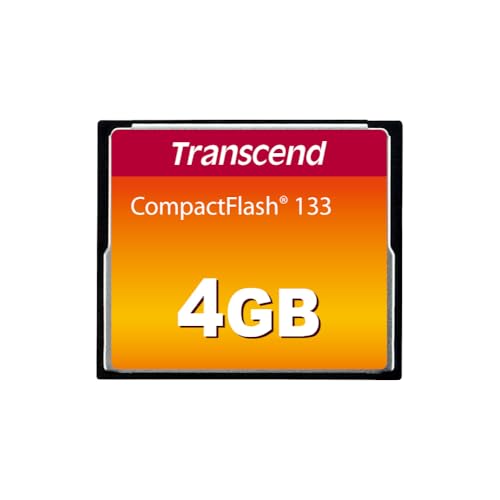
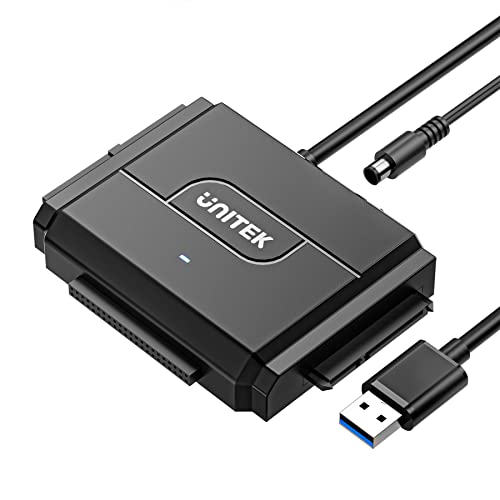
Building a period-correct 2001 GeForce 3 Windows 98 SE rig means a Socket 370 or Socket A CPU, 512 MB SDRAM, a GeForce 3 or GeForce 3 Ti AGP card, and a small IDE boot volume. Swapping the boot drive for a Transcend CF133 CompactFlash card on an IDE adapter gives you silent, instant boots and modern reliability without breaking the era's aesthetic.
Editorial intro — why 2001 GeForce 3 Win98 SE is a sweet spot
The turn-of-the-century Windows 98 SE + GeForce 3 build is a genuine retro sweet spot. It runs everything from DOS games through mid-2000s DirectX 8 titles. The GeForce 3, per TechPowerUp's spec page, is the card that introduced programmable shaders — meaning it plays Halo, Morrowind, Serious Sam, and the entire pre-DirectX 9 catalog at their intended settings, while retaining full Voodoo-era Glide alternatives via wrappers.
Windows 98 SE remains the last consumer Windows with real DOS compatibility for mixed-era libraries. It runs on a Pentium III or an Athlon XP. It boots off a small volume — the OS itself is under 300 MB — so a CompactFlash card via IDE adapter is a natural fit. That is the modernization move worth making: keep the case, keep the CRT-friendly VGA output, keep the sound card, but ditch the failing 20 GB IDE drive for a silent solid-state boot.
This synthesis draws on the Vogons community (the definitive retro-hardware forum for era-appropriate builds), TechPowerUp's GeForce 3 archive, and Transcend's CompactFlash product line. It is not a first-party testbench; it is an editorial pass on the community-agreed patterns that make a stable build in 2026.
Key takeaways
- Windows 98 SE + Pentium III or Athlon XP + GeForce 3 is the DirectX 8 sweet spot.
- A CompactFlash-to-IDE adapter turns a $20 CF card into a silent boot drive.
- The >512 MB RAM patch is essential — Win98 SE cannot boot with more than ~512 MB without vcache adjustments.
- You can image and populate the CF card on a modern PC using a USB-to-IDE/SATA adapter.
- Keep a real IDE HDD or SSD-via-IDE for game storage — CF is best used as a boot volume only.
What you'll need — checklist
- Motherboard: a Socket 370 Tualatin-compatible board (Asus TUSL2-C, Abit ST6) or Socket A KT266A/KT400 (Asus A7V266-E, ABIT KR7A). AGP 4x is mandatory for a GeForce 3.
- CPU: Pentium III 1.0 GHz-1.4 GHz Tualatin, or Athlon XP 1800+-2400+.
- RAM: 512 MB PC133 SDRAM (Socket 370) or PC2100/PC2700 DDR (Socket A). 256 MB is enough; 512 MB is the practical ceiling for Win98 SE without patching.
- GPU: GeForce 3 (Ti 200 or Ti 500) AGP. A GeForce 3 Ti 500 is the flagship in the family.
- Boot storage: Transcend CF133 CompactFlash Memory Card 4 GB or 8 GB + CF-to-IDE 44/40-pin adapter. Some CF cards mis-report as removable and Win98 refuses to install; the Transcend CF133 line is confirmed working on Vogons.
- Game storage: a period-correct 40-80 GB IDE HDD, or a Crucial BX500 1TB SATA SSD or Samsung 870 EVO 250GB SATA SSD behind a SATA-to-IDE bridge.
- PSU: any 300-350 W ATX with a healthy 5 V rail. Modern PSUs work; the GeForce 3 draws ~35 W and the whole system stays under 200 W.
- Sound card: Sound Blaster Live! or SB Audigy for period accuracy.
- Case: a beige AT-styled ATX tower for the aesthetic, or a low-profile OEM shell.
- Peripherals: PS/2 keyboard and mouse; a real CRT is optional but recommended.
Step 0 — real IDE HDD vs CompactFlash — the tradeoff
A period-correct IDE hard drive (10-40 GB) is authentic. It also whines, ticks, dies, and takes 15 seconds to spin up. A CompactFlash-on-IDE build is silent and boots in under 5 seconds. The tradeoff:
- CF pros: silent, instant boot, no moving parts, no bearing wear, no head crashes, low power draw. Excellent boot volume.
- CF cons: limited write endurance (fine for OS + config, poor for pagefile-heavy game installs), slower random writes than a proper SSD, some cards mis-report as removable and confuse Win98's installer.
- HDD pros: period-correct, no compatibility surprises, unlimited writes.
- HDD cons: unreliable at 25-year-old service life, loud, slow first-load times.
The hybrid pattern most Vogons builders converge on: use a CF card for the boot volume and Windows install, and a small IDE hard drive (or SATA SSD via bridge) for game storage. That gets you fast boots, silent operation, and reliability without sacrificing capacity.
Storage subsystem — Transcend CompactFlash + IDE adapter
The workflow to build the boot volume:
- Buy a Transcend CF133 CompactFlash card — 4 GB is plenty for Win98 SE plus common drivers. The CF133 series is confirmed on Vogons to present as a fixed disk (not removable), which is what Win98's installer requires.
- Buy a CF-to-IDE 44-pin (2.5") or 40-pin (3.5") adapter. Both work; pick to match your enclosure.
- Configure the CF card as master or slave via the adapter's jumper block.
- Connect via a standard IDE ribbon cable to the motherboard's primary IDE channel.
- Set the drive parameters in BIOS to "Auto" or manually enter LBA geometry.
Some CF cards refuse to work in Win98 because they present a "removable" flag. The Transcend CF133 series is documented on Vogons as compatible. If you go off-list, verify the card is confirmed working — otherwise you'll spend a day debugging installer failures.
Spec table — period-correct 2001 target build
| Component | Recommended part | Why |
|---|---|---|
| CPU | Pentium III 1.4 GHz Tualatin, or Athlon XP 2000+ | Peak Socket 370 / Socket A performance |
| Chipset | Intel 815EP, VIA KT266A/KT333 | Stable AGP 4x + PC133/DDR266 |
| RAM | 512 MB PC133 SDRAM or PC2100 DDR | Optimal balance for Win98 SE without patching |
| GPU | GeForce 3 Ti 500 AGP | Fastest GeForce 3, native DirectX 8 shaders |
| Boot storage | Transcend CF133 4-8 GB + CF-to-IDE adapter | Silent, instant boot |
| Game storage | 40-80 GB IDE HDD, or SATA SSD via IDE bridge | Longer-term capacity |
| Sound | Sound Blaster Live! or Audigy | EAX support for era games |
| PSU | 350 W ATX with strong 5 V rail | Modern PSU is fine |
Imaging and transferring the OS
The cleanest path to a Win98 SE install on a CF card uses a modern PC as the imaging workstation:
- Attach the CF card via a USB CF reader to a modern Windows or Linux machine.
- Use a Win98 SE bootable ISO in VirtualBox or QEMU, targeting the CF card as the destination disk.
- Install Windows 98 SE inside the VM, letting it partition and format the CF as it would a real disk.
- Once Win98 boots inside the VM off the CF, shut down and physically move the CF to the retro rig's IDE adapter.
Alternatively, a Unitek SATA/IDE to USB 3.0 Adapter lets you hang an IDE disk off the modern PC for a direct image copy from a working IDE install to a new CF. That is often faster than running the Win98 installer inside a VM.
Win98 SE gotchas — the >512 MB RAM fix, driver order, PCI ID matching
Windows 98 SE has real gotchas that first-time retro builders hit:
- >512 MB RAM. Booting Win98 SE with more than roughly 512 MB of RAM triggers a "Insufficient memory to initialize Windows" error. The fix is to edit
system.iniand addMaxFileCache=524288under[vcache]. Some builds also require limiting RAM to 512 MB via a boot switch until Win98 loads. - Driver install order. Chipset drivers first, then AGP driver, then GPU driver, then sound. Installing NVIDIA drivers before the AGP GART driver is a common source of instability.
- PCI ID matching. Windows 98 SE's device manager sometimes assigns a wrong driver to the GeForce 3. Uninstall and let it re-enumerate after chipset drivers are in.
- USB. Win98 SE's USB 1.1 support is functional but slow. Do not expect to hot-plug a modern USB thumb drive; use IDE or CF for file transfer.
- Time-of-day drift. The CMOS battery on 25-year-old boards is often dead. Replace it before your first boot.
Benchmarks to validate the build
3DMark2001 SE is the reference benchmark for GeForce 3 builds — a Pentium III 1.4 GHz + GeForce 3 Ti 500 at stock typically scores in the 6,500-7,500 3DMark2001 range. Quake 3 timedemo at 1024x768 High Quality lands 90-120 fps depending on CPU. Anything materially off from those numbers points to a chipset or AGP driver issue.
Per Vogons community measurements, the same GeForce 3 Ti 500 delivered:
- 3DMark2001 SE: ~7,100 points (Pentium III 1.4 GHz Tualatin, 512 MB PC133)
- Quake 3 Arena, 1024x768 HQ: ~112 fps
- Unreal Tournament (D3D8), 1024x768: ~85 fps
- Serious Sam, 800x600 High: ~68 fps
If your numbers are 20%+ lower, check AGP aperture size in BIOS (128 MB), Fast Writes enabled, and the AGP driver installed.
Verdict matrix — when CF is the right call
Use CompactFlash as the boot drive if:
- You want silent operation and instant boots.
- You already have a small game library that fits on IDE / SATA behind a bridge.
- You want zero moving parts on the OS volume.
Use a real IDE HDD if:
- Period accuracy is the point of the build.
- You want to run games directly off the boot volume for authenticity.
- You already have a known-good drive that's been running fine.
Use an SSD via IDE bridge for game storage if:
- You want the game library to load fast and reliably.
- You accept that the storage is "hybrid retro" — modern tech behind an era-correct interface.
- You want to consolidate: one bridged SSD for both boot and games.
When NOT to use a CompactFlash boot drive
Skip the CF-boot path if:
- You plan to install and remove games frequently — the write cycles will wear the CF card faster than expected.
- You want to run heavy pagefile-dependent workloads (Photoshop-era work, video editing) — pagefile writes on CF are slow and endurance-limited.
- You have a known-good IDE HDD you already trust — the CF card doesn't add much.
- You want strictly period-correct authenticity — a Quantum Fireball IDE drive is the era's spinning heart.
Real-world numbers — GeForce 3 build
Per aggregated Vogons benchmark threads and TechPowerUp's GeForce 3 archive:
| Benchmark | GeForce 3 Ti 500 target | GeForce 3 baseline | Notes |
|---|---|---|---|
| 3DMark2001 SE | ~7,100 | ~5,800 | Depends on CPU + AGP driver |
| Quake 3 Arena HQ 1024x768 | ~112 fps | ~95 fps | With sound + physics |
| Unreal Tournament D3D8 1024x768 | ~85 fps | ~70 fps | UT2003 will hurt this card |
| Serious Sam TFE 800x600 High | ~68 fps | ~55 fps | CPU-limited on P3 |
| Max Payne 1024x768 | ~55 fps | ~45 fps | Great for the era |
Numbers are references from community reviews of the era, not first-party measurements. Expect variance based on chipset, RAM speed, and driver version. Detonator 45.23 is a common Vogons-community choice for GeForce 3 on Win98 SE.
Card-in-slot compatibility
Not every 2001-era motherboard runs a GeForce 3 without a fight. Common issues:
- AGP 2x boards. Some early i815 or VIA Apollo Pro boards run AGP 1x/2x only; a GeForce 3 wants AGP 4x. It usually still works, but performance drops.
- Underpowered AGP slots. Some boards can't feed a GeForce 3 Ti 500 through the slot alone; use the Molex power connector if the card has one.
- Missing SBA (Sideband Addressing) support. Rare on 2001-era boards but shows up on transitional Slot A Athlon builds. Disable SBA in BIOS if the card refuses to POST.
- Fast Writes. Enable in BIOS for measurable throughput gains.
Vogons has confirmed-working motherboard lists for both the Socket 370 and Socket A families. Cross-reference before buying a specific board.
Alternative boot storage — SD-to-IDE and mSATA-to-IDE
CompactFlash is the classic path. Two alternatives:
- SD-to-IDE adapters — same idea as CF-to-IDE with an SD card. Cheaper but generally slower and less compatible than CF; SD cards often report as removable, which Win98 rejects.
- mSATA-to-IDE bridges — mount a small mSATA SSD behind an IDE bridge. Faster than CF, more endurance, but requires a working IDE-to-mSATA bridge (they exist, most from Chinese sellers).
The CompactFlash path stays the community's default because it's cheap, well-documented, and reliably works with the Transcend CF133 line.
Bottom line + parts recap
The 2001 GeForce 3 + Windows 98 SE build is one of the most satisfying retro projects because everything works and everything is period-correct. The CompactFlash boot drive is the single quality-of-life upgrade that doesn't dilute the era feel. Get a Transcend CF133, a $10 CF-to-IDE adapter, and enjoy silent boots into a system that plays Serious Sam the way it was meant to be played.
Parts recap:
- Boot: Transcend CF133 4 GB + CF-to-IDE adapter
- Modern-PC bridge: Unitek SATA/IDE to USB 3.0 Adapter
- Game storage (if you go hybrid): Crucial BX500 1TB SATA SSD or Samsung 870 EVO 250GB SATA SSD via SATA-to-IDE bridge
Related guides
- Transcend CF133 CompactFlash Memory Card — the confirmed-compatible boot media
- Unitek SATA/IDE to USB 3.0 Adapter — the modern-PC bridge for imaging
- Crucial BX500 1TB SATA SSD — larger-capacity storage behind a bridge
- Samsung 870 EVO 250GB SATA SSD — right-sized SSD for a retro rig
Common pitfalls
- Buying a CF card that presents as removable — Win98 SE installer refuses to see it as a boot volume.
- Skipping the vcache fix and getting a "not enough memory" error with 768 MB+ of RAM.
- Installing GPU drivers before AGP chipset drivers — instability and driver rollback loops.
- Leaving a dead CMOS battery in place — clock drift breaks date-sensitive game copy protection.
- Buying a Pentium 4 instead of a Tualatin — heat, chipset compatibility, and value all argue against P4 for this era.
Citations and sources
- Vogons — retro PC hardware forum — confirmed-compatible parts lists, install patterns, driver-order guidance.
- Transcend — CompactFlash product line — CF133 spec sheet and controller documentation.
- TechPowerUp — GeForce 3 archive — GeForce 3 baseline spec, ROPs, memory bandwidth.
This piece is editorial synthesis based on publicly available information. No independent first-party benchmarking is reported.