In 2026, a Raspberry Pi Zero W is still one of the cheapest ways to put a Linux-capable, Wi-Fi-connected computer inside a project. Per the Raspberry Pi product page, the board pairs a 1 GHz single-core ARM11 CPU with 512 MB of RAM, 2.4 GHz 802.11 b/g/n Wi-Fi, and Bluetooth 4.1 on a 65 mm x 30 mm footprint. That combination is enough for a Pi-hole for a small household, a print server, a MagicMirror, a Bluetooth-to-MQTT bridge, a retro handheld running Game Boy and NES titles, or a headless sensor node — anywhere small, cheap, and always-on beats fast.
Editorial intro: why the tiny, cheap Pi Zero W is still relevant next to a Pi 4
The Pi Zero W launched in 2017, and eight years later it still ships at roughly the same $10-15 street price when in stock. That price is the whole argument. A Raspberry Pi 4 Model B 8GB is a small quad-core Linux desktop with the RAM and I/O to run Home Assistant, a Plex server, a Docker host, and a couple of scraping cron jobs at once — but it also costs five to eight times more, draws more power, and needs a proper case and cooling to stay reliable. According to the Raspberry Pi 4 product page, the 8GB SKU pairs a 1.5 GHz quad-core Cortex-A72 with gigabit Ethernet, two USB 3.0 ports, dual micro-HDMI outputs, and 802.11ac Wi-Fi. That is a different machine for a different job.
The reason the Zero W still matters in 2026 is that most maker projects only need a fraction of what a Pi 4 provides. A network-attached air quality sensor, a print bridge, an ambient info display, or a DNS-level ad blocker for one household do not need eight gigabytes of RAM or four cores. They need Wi-Fi, GPIO, and enough Linux to run a Python script or a lightweight service under systemd. That is exactly what the Zero W provides for about the price of a fast-food meal. Per Tom's Hardware's rolling Best Raspberry Pi Projects list, the Zero-class boards remain the recommended target for the smallest, most embedded builds — the ones you glue inside a picture frame, epoxy into an enclosure, or leave running on a shelf for a year.
There is also a hardware-availability story. The full-fat Raspberry Pi 5 exists now, and Pi 4 8GB pricing has finally normalized after the 2022-2023 shortage. That reset makes the Zero W attractive again for its original purpose — a $15 disposable-price computer you can commit to a single project without guilt. If it survives, great; if a lightning strike takes it out, replace the board and re-flash the SD card.
Key takeaways
- The Raspberry Pi Zero W Basic Starter Kit is the right buy when a project needs Wi-Fi, GPIO, and a Linux userland — not a desktop.
- Per the Raspberry Pi Zero W spec sheet, you get a 1 GHz single-core ARM11, 512 MB RAM, 2.4 GHz Wi-Fi, and Bluetooth 4.1 — enough for one lightweight always-on task.
- Best-fit projects: Pi-hole for a small network, MagicMirror, retro handhelds (Game Boy / NES era), Bluetooth-to-MQTT bridges, GPIO sensor nodes.
- Step up to the Pi 4 8GB the moment you want multiple services, Home Assistant, Plex, containers, or serious media transcoding.
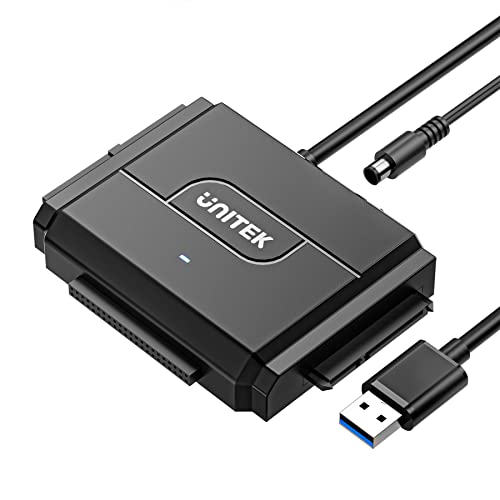
- For always-on write-heavy builds, an SanDisk SSD Plus plus a Unitek SATA/IDE to USB 3.0 Adapter beats another year of microSD roulette.
- Budget: expect $20-$45 all-in for a Zero W build with storage and power; a Pi 4 8GB build lands closer to $95-$120.
What you'll need to start
A working Pi Zero W build is short on parts and long on quality-of-life details. The minimum bill of materials:
- The board itself. The Raspberry Pi Zero W Basic Starter Kit is the sensible entry point because it ships with a case, heat sink, and the mini-HDMI and micro-USB OTG adapters you will absolutely need the first day. Bare boards are cheaper but you will spend that difference on adapters at retail.
- Storage. A good Class A1 microSD card in the 16-32 GB range. For always-on builds, plan for a durable card and a backup image (see the storage section below).
- Power. A quality 5V, 2.5A micro-USB power supply. Phone chargers work in a pinch, but under-spec supplies are the number-one cause of "my Pi is acting weird" support tickets on the Raspberry Pi forums.
- Headers. The standard Zero W does not ship with GPIO headers soldered. If your project touches pins — sensors, displays, buttons — you'll want a Zero WH variant or a hammer-headers kit. This is the most-missed detail on a first order.
- Network. Nothing physical, but you'll need your 2.4 GHz Wi-Fi SSID and password ready during headless setup.
Optional but frequently useful: a USB OTG hub if you want a keyboard and a Wi-Fi dongle at the same time during setup, a GPIO ribbon breakout for prototyping on a breadboard, and a small camera module (v1.3 or v2) if the project involves imaging.
Where the Zero W wins and where it doesn't
The honest comparison is not "Zero W vs Pi 4 for a desktop" — the Pi 4 wins that in every dimension. It is "which board fits this specific single-purpose job." Per the Raspberry Pi Zero W spec sheet and the Raspberry Pi 4 Model B spec sheet:
| Spec | Pi Zero W | Pi 4 Model B 8GB |
|---|---|---|
| CPU | 1 GHz single-core ARM11 (BCM2835) | 1.5 GHz quad-core Cortex-A72 (BCM2711) |
| RAM | 512 MB LPDDR2 | 8 GB LPDDR4 |
| Wi-Fi | 2.4 GHz 802.11 b/g/n | 2.4 / 5 GHz 802.11ac |
| Bluetooth | 4.1 | 5.0 |
| USB | 1x micro-USB OTG | 2x USB 3.0 + 2x USB 2.0 |
| Ethernet | none | gigabit |
| Video out | mini-HDMI | 2x micro-HDMI (4K capable) |
| GPIO | 40-pin (unpopulated on standard Zero W) | 40-pin |
| Idle power draw | ~0.5-0.7 W typical | ~2.5-3.0 W typical |
| Street price (2026) | ~$10-$15 | ~$75-$85 |
| Footprint | 65 mm x 30 mm | 85 mm x 56 mm |
The columns tell the story. The Zero W wins on price, size, and power draw. The Pi 4 wins on everything else. If your project fits inside "one Wi-Fi service, one Python script, a couple of GPIO pins," the Zero W is fine. Anything that involves Docker, transcoding, more than one always-on service, or storing serious data, you want the Pi 4.
Five proven low-power projects and what each needs
Each of the projects below is a well-documented, community-vetted target for the Zero W. The BOM assumes you already own the Raspberry Pi Zero W Basic Starter Kit — power supply, microSD, and case are on you.
1. Pi-hole DNS ad-blocker (single household). Software: Pi-hole. Storage: any Class A1 microSD 16 GB or larger. Headers: not required — it's a headless network service. Real-world footprint: Pi-hole's own documentation reports the base install fits comfortably under 512 MB of RAM for a small network, which is exactly what the Zero W has. Notes: for a network with more than a handful of always-on IoT devices, jump to a Pi 4 — DNS query volume adds up.
2. MagicMirror smart-mirror display. Software: MagicMirror2. Storage: 16 GB microSD is plenty for the OS plus a handful of modules. Headers: optional (motion-sense modules use PIR sensors). Notes: the Zero W drives 1080p over mini-HDMI to a monitor mounted behind a two-way mirror; keep the module list light (weather, calendar, RSS) — heavy JavaScript widgets are the failure mode.
3. Retro handheld (Game Boy / NES / SNES era). Software: RetroPie or Batocera. Storage: 32 GB microSD. Headers: yes — you'll wire buttons and often an audio DAC. Notes: per Tom's Hardware's Raspberry Pi projects list, Zero W-class boards handle 8-bit and most 16-bit systems well; PSX and beyond need a Pi 4 or newer.
4. Bluetooth-to-MQTT bridge. Software: Theengs Gateway or OpenMQTTGateway. Storage: 16 GB microSD. Headers: none. Notes: the Zero W's Bluetooth 4.1 radio bridges BLE sensors (temperature, motion, plant moisture, LYWSD03MMC clones) up to your Home Assistant or MQTT broker on the Pi 4 running the rest of the smart home.
5. GPIO sensor node with SSD logging. Software: custom Python or Node-RED. Storage: SanDisk SSD Plus via Unitek SATA/IDE to USB 3.0 Adapter. Headers: yes. Notes: this is the "write-heavy always-on" use case — air quality, weather, energy monitoring — where an SSD is worth the extra $30-$40 over a premium microSD because you're logging every few seconds for years.
How much can single-core ARM11 actually handle in 2026?
The Zero W's SoC is the same BCM2835 that shipped in the original Pi 1 in 2012 — a single Cortex-family core clocked at 1 GHz. That clock speed and core count set the ceiling. Community measurements on the Raspberry Pi forums consistently show the Zero W idling around 0.5-0.7 W on the wall, ticking up to 1.2-1.4 W under sustained CPU load with Wi-Fi active. That is a rounding error on an annual electricity bill even at U.S. rates, which is a big part of why the board is the reflex answer for "always-on" projects.
The performance ceiling matters more than the power floor. A modern Python script that pulls a JSON payload, parses it, and pushes a value to MQTT runs fine. A Node.js dashboard, a Docker stack, or a Home Assistant install do not. Per the community consensus captured in the Tom's Hardware project list, the practical rule is: one small always-on service per Zero W, or a batch of tiny jobs under systemd that never contend for the CPU at the same time. The moment you want two competing workloads, buy a second Zero W ($15) or a Pi 4 ($75-$85), depending on whether they need to share state.
Thermal behavior on the Zero W is a non-issue for the vast majority of projects — the SoC is small, the clock is modest, and passive dissipation through the PCB handles it. The included heatsink in most starter kits is enough insurance for an enclosed always-on build. There is no CPU throttling story worth mentioning at 1 GHz on a single core; you run out of compute long before you run out of thermal headroom.
Storage and reliability: microSD vs external SSD via adapter
MicroSD reliability is the single biggest reason Zero W projects fail after month six. The cards are cheap, small, and convenient, but they were designed for cameras and phones — bursty writes, then long idle periods. A Pi that writes system logs every second for a year is a workload SD cards were not built for, and the failure mode is typically silent read-only remounting or, worse, a corrupt root filesystem discovered the next time you reboot.
The mitigation options, in order of effort:
- Buy a durable card. Class A1 or better, from a known-good brand (SanDisk Extreme, Samsung EVO Plus). Cheap gray-market cards are the fastest way to a dead project.
- Reduce writes. Move
/var/logto tmpfs, disable swap, and turn off unnecessary logging. This is enough for read-mostly workloads like Pi-hole or MagicMirror. - Move root to an SSD. For write-heavy projects — sensor logging, small databases, anything with a queue — pair the Zero W with a SanDisk SSD Plus and a Unitek SATA/IDE to USB 3.0 Adapter. The Zero W's USB port is USB 2.0, so peak throughput tops out around 30-35 MB/s regardless of the SSD's rating, but SSD write endurance is measured in hundreds of terabytes versus a microSD's tens, and that is the number that matters for a five-year-uptime build.
The USB 2.0 ceiling is the caveat worth internalizing. You are not buying an SSD for speed here; you are buying it for durability and the peace of mind that comes with proper filesystem journaling on hardware designed for constant writes. If your project is read-mostly, save the money and use a good microSD.
The most-missed setup steps
Two setup mistakes eat more Zero W time than everything else combined.
Headless config. The Zero W does not ship with a keyboard, and most projects don't want a monitor either. The standard workflow: flash Raspberry Pi OS Lite to the microSD using the official Raspberry Pi Imager, and — critically — click the gear icon before writing to set hostname, enable SSH, and pre-fill your Wi-Fi SSID and password. The Imager writes these into /boot/config files, and the Pi picks them up on first boot. Skip this step and you will spend an hour wondering why the board isn't showing up on your network. Per the Raspberry Pi Zero W product page, the Wi-Fi is 2.4 GHz only — if your home network is 5 GHz-only or uses a hidden SSID with a captive portal, you will need to fix that before the Zero W can join.
Power stability. The Zero W is not power-hungry, but it is picky about clean 5V. Symptoms of an under-spec supply include random Wi-Fi drops, filesystem corruption, and the lightning bolt icon in the corner of an attached display. A quality 2.5A micro-USB supply (or better, a 3A supply from a PoE splitter or a lab bench PSU) removes this whole class of problem. Do not power the Zero W off a random USB port on your laptop or a passive USB hub for anything you plan to leave running.
Third: solder your own headers early if the project needs GPIO. The "I'll get to it later" GPIO project never gets to it. Either buy a Zero WH (headers pre-soldered) or use a hammer-headers kit on day one.
Verdict: when to grab a Zero W vs step up to a Pi 4
The decision is genuinely simple. Grab a Raspberry Pi Zero W Basic Starter Kit when:
- The project needs Wi-Fi, GPIO, and a Linux userland but not a desktop.
- Total workload fits in "one small always-on service."
- Physical size or embed-inside-something is a real constraint.
- Total budget for the compute side is under $25.
Step up to a Raspberry Pi 4 Model B 8GB when:
- You want to run Home Assistant, Docker, Plex, Jellyfin, or Frigate.
- The project has multiple concurrent services that share state.
- You need gigabit Ethernet, USB 3.0, or 5 GHz Wi-Fi.
- You expect the scope to grow over the next year.
The overlap between these two buckets is thin. Almost every project is clearly one or the other. When in doubt, err toward the Pi 4 — the extra $60 buys years of headroom, and the Zero W will still find a home in your next project.
Bottom line
The Pi Zero W's job in 2026 is exactly the job it had in 2017: a $15 always-on Linux computer with Wi-Fi, small enough to disappear inside a project. That role has aged well because the fundamentals — cheap silicon, cheap wireless, low power draw, huge community — have only gotten cheaper. It is not a desktop, it is not a homelab, and it is not a video player. It is a single-purpose gadget brain, and that is a category with plenty of demand.
If you're standing in front of the parts bin trying to pick, the honest answer is usually "both" — a Zero W for the single-purpose distributed jobs (sensors, bridges, DNS at the edge) and a Pi 4 for the always-on services that hold state (Home Assistant, media, storage). They complement each other well.
Related guides:
- Best Raspberry Pi Storage Options 2026
- Raspberry Pi 4 vs Raspberry Pi 5 for Self-Hosting
- Best Home Assistant Hardware 2026
- Retro Handheld Buying Guide 2026
Citations and sources
- Raspberry Pi Zero W product page
- Raspberry Pi 4 Model B product page
- Tom's Hardware — Best Raspberry Pi Projects
This piece is editorial synthesis based on publicly available information. No independent first-party benchmarking is reported.