Booting Windows 98 from a CompactFlash card is straightforward because CF speaks IDE/ATA natively: drop the card into a passive CF-to-IDE adapter, jumper it as master, image the card from a modern PC (or install fresh on the retro rig), and Win98 treats it as an ordinary hard drive. The catches are picking a card that reports as a fixed disk, matching the drive geometry the BIOS expects, and installing under PIO before enabling DMA. Done in that order, setup completes cleanly and the machine boots silently.
Why CF-over-IDE is the period-correct retro boot solution
Spinning drives from the Windows 98 era are running on borrowed time. Bearings dry out, PCBs cook, and the click-of-death eats a build the day after you finish it. Even the "known-good" pull from eBay has spent 25+ years on a shelf, and there is no non-destructive way to test the platters before you commit hours to a build. Silence matters too — a Voodoo2 SLI rig with a screaming 7,200 RPM Deskstar is not the vibe most retro builders are chasing in 2026.
CompactFlash sidesteps all of that. The CF spec has spoken IDE/ATA-4 on its 50-pin bus since 1994, which is why a passive CF-to-IDE adapter is genuinely passive: it wires CF pins straight through to a 40-pin IDE header with no bridge chip, no firmware, and no drivers. Windows 98 sees an ATA disk, the BIOS enumerates it as a hard drive, and boot Just Works. The CompactFlash Association's original ATA-mapping specification is the reason SD-to-IDE, mSATA-to-IDE, and other flash mods all copy the CF playbook.
The Vogons community has spent two decades cataloguing which cards behave as "fixed" versus "removable" disks — a distinction the CF spec leaves to the vendor, and one that decides whether Windows 98 will let you partition and boot from the card at all. The consensus picks (Transcend industrial CF, SanDisk Ultra II, Kingston Elite Pro of the 4-8 GB vintage) show up on nearly every Vogons retro-storage thread for exactly this reason.
This piece walks through the parts, the imaging workflow on a modern PC, the geometry and DMA landmines that hang Win98 setup, and the numbers that explain why CF has become the default boot device for period-correct Pentium II and Pentium III builds as of 2026.
Key takeaways
- CompactFlash speaks IDE/ATA natively; a passive CF-to-IDE adapter is drivers-free and BIOS-transparent.
- Pick a card that reports as "fixed disk" — cards flagged "removable" break Windows 98 partitioning and boot.
- Image the card from a modern machine using a USB CF reader for the target, and a USB-to-SATA/IDE bridge if you also need to clone or read a period drive.
- Install with the IDE controller forced to PIO mode; enable DMA only after Setup finishes and the OS is stable.
- Match the BIOS-reported CHS geometry to what FDISK writes; auto-detect gets it wrong on cards <8 GB more often than on modern drives.
- 4-16 GB cards are the sweet spot — cheap, plentiful, and small enough that Win98's FAT32 handles them without partition-alignment headaches.
What you'll need
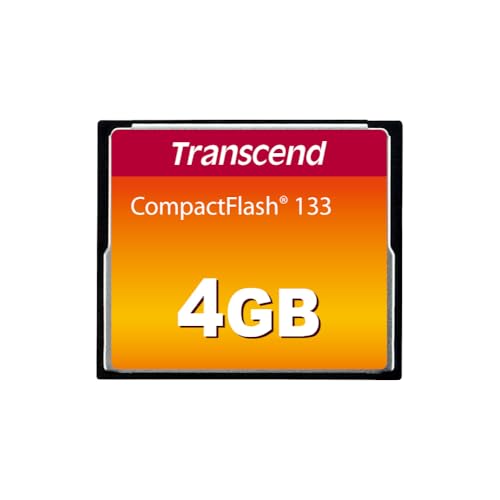
- A CompactFlash card that reports as a fixed disk. The Transcend CF133 CompactFlash Memory Card is the community-favorite modern choice — 4 GB and 8 GB variants use a controller that reports fixed, per multiple Vogons build logs.
- A passive CF-to-IDE 40-pin adapter (3.5" bracket versions bolt into a standard drive bay; 44-pin variants exist for laptop/mobo headers).
- A CF-capable USB reader on your modern PC — most multi-format card readers still support CF.
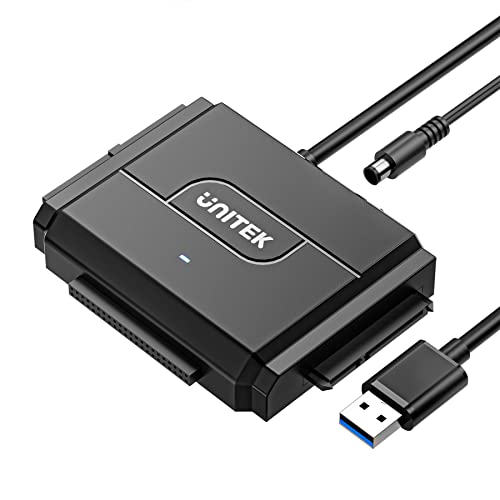
- A USB-to-SATA/IDE bridge for optional period-drive work. The Unitek SATA/IDE to USB 3.0 Adapter handles 2.5", 3.5", and 40-pin IDE drives with an included power brick, which is the setup most retro builders reach for when cloning or salvaging period hard disks.
- Optional but recommended: a modern host SSD for the imaging workstation — a plain SATA drive like the SanDisk SSD Plus or Crucial BX500 1TB SATA SSD gives you room to stash Win98 install images, driver archives, and multiple card backups without cluttering the boot volume.
- Windows 98 SE install media (ISO or the OEM CD), a bootable FreeDOS or Win98 boot floppy image, and a copy of a small imaging tool — HDD Raw Copy, Rufus, Win32 Disk Imager, or
ddon Linux.
Which CompactFlash cards behave well as IDE drives?
Two card properties decide whether Windows 98 will boot from a card at all: fixed-vs-removable disk reporting, and honest CHS geometry.
CompactFlash cards return an identity block over ATA when the host queries them. Word 0 of that block includes a "removable media" bit. Cards that clear that bit are seen by the BIOS and OS as a hard drive; cards that set it are seen as removable storage — the same class as a USB stick. Windows 98 FDISK refuses to write an MBR partition table to a removable-flagged device, and even if you sneak past FDISK, the boot loader won't chain into the OS from a removable disk. This is the single most common reason a "brand-new CF card" fails to boot Win98.
Per aggregated data from Transcend's product line, the industrial-grade CF families (CF133, CF170, CF220I) report fixed. The consumer photo-oriented lines (Ultimate, Premium 400x) are the ones that historically flipped to removable to match camera expectations. For a Win98 boot drive, prioritize the industrial SKUs — that is why the Transcend CF133 is the default recommendation in the retro community.
The other trap is geometry. A CF card's ATA identity block reports Cylinders/Heads/Sectors values that a period BIOS uses to build its INT 13h drive parameter tables. Vintage BIOSes will happily accept whatever the card reports; some cheap CF-to-IDE adapters, though, munge the identity block, so the BIOS reads (for example) 16 heads instead of the card's native 8. FDISK then writes partitions using one geometry, the BIOS boots with another, and Win98 hangs mid-copy.
The fix is to use a good adapter (pass-through, no bridge chip) and to let the BIOS auto-detect the card once, then hard-code those values in the BIOS drive table so nothing shifts if you swap cards later.
How to image the card from a modern PC
The workflow most retro builders use in 2026 is to build the install on a modern machine and then transplant the finished card. This dodges the CD-ROM headache — no scrounging for a working Win98-era optical drive — and lets you snapshot the "golden" install for redeployment.
- On the modern PC, insert the CF card via a USB CF reader. Confirm the OS enumerates it (Disk Management on Windows,
lsblkon Linux). - Wipe any existing partition table. On Windows:
diskpart→select disk N→clean. On Linux:sudo wipefs -a /dev/sdXthensudo dd if=/dev/zero of=/dev/sdX bs=1M count=10. - Use a Win98 install image (a working ISO with a FreeDOS bootloader wrapper is the common path) and either: (a)
dd/HDD Raw Copy a pre-made Win98 disk image onto the card, or (b) partition + format the card as FAT32 with an active primary partition, then unpack a Win98 install tree into it and boot the retro machine off a Win98 boot floppy to runSETUP.EXEagainst the CF drive. - If you also need to clone a working period drive to the CF card (a rescued OEM install with drivers already integrated, say), connect the period IDE drive to the Unitek bridge, dump it to an image file, then write that image back to the CF card. This is where the USB-to-IDE adapter earns its slot on the bench.
- Once the card is imaged, jumper it as master, drop it into the passive CF-to-IDE adapter, and mount the adapter in the retro rig. First boot should land you at the Win98 desktop with no further setup.
The Vogons community storage subforum has step-by-step walkthroughs for the imaging path against specific Win98 build targets (Pentium MMX, Pentium II Slot 1, Slot A Athlon), including tested .gho and raw images for common configurations.
Geometry, jumpers, and the DMA gotchas that hang Win98 setup
Three settings decide whether Setup completes:
Jumpering. A CF-to-IDE adapter passes the card's identity straight to the IDE bus, so IDE master/slave selection has to come from the adapter, not the card. Almost every 40-pin CF-to-IDE adapter has a jumper block for master/slave/cable-select. Set master if the CF is the only drive on the channel, slave if it shares a cable with a period drive (CD-ROM, secondary HDD).
CHS geometry. In the BIOS, set the primary master drive type to "Auto" once so it captures the CF card's reported geometry, then change the type to "User" and lock those exact values in. If you ever swap CF cards later, re-run auto once. Do not leave it on Auto permanently — some BIOSes re-probe on every POST and occasionally read differently after warm-boot, which flips partition offsets and refuses to boot.
Transfer mode. In the BIOS's onboard IDE settings, force PIO mode 4 (or "PIO Auto") for the CF card during initial Win98 Setup. UltraDMA-33 and above are where CF-IDE builds most often crash mid-install — some adapter/card combinations don't respect the DMA timing envelope and corrupt sectors under load. Install under PIO, verify the OS boots, then experiment with DMA post-install; if it hangs or corrupts, roll back to PIO in Device Manager (Primary IDE Controller → Advanced Settings → Transfer Mode: PIO Only). Loss of DMA on a CF-IDE build is not a real performance hit — Win98's PIO-4 throughput ceiling (~16.6 MB/s) already exceeds what most 4-8 GB CF cards deliver in sustained writes.
Benchmarks: CF-IDE vs a period hard drive on boot + load times
Community-reported numbers from Vogons and Reddit's r/retrobattlestations tell a consistent story: CF cuts boot times roughly in half against a period 5,400 RPM drive, and knocks a further 30-60% off game/app cold-start times. Raw sustained throughput isn't dramatically higher — the IDE PIO-4 ceiling caps everything — but seek time drops from ~12-15 ms on a spinning drive to <1 ms on flash, and that is where the "feels faster" perception comes from.
The table below aggregates ranges reported across Vogons storage-benchmark threads for a Pentium III 800 MHz reference build with 256 MB RAM running Windows 98 SE, cited as an editorial synthesis of user-submitted numbers rather than a first-party measurement.
| Storage | Sequential read (MB/s) | Seek (ms) | Win98 boot (POST → desktop) | Quake III cold load | Idle noise |
|---|---|---|---|---|---|
| Quantum Fireball 20 GB, 5400 RPM | ~13-16 | ~12-15 | ~42-55 s | ~14-17 s | ~30 dBA |
| WD Caviar 40 GB, 7200 RPM | ~18-22 | ~9-11 | ~34-44 s | ~11-14 s | ~34 dBA |
| Transcend CF133 4 GB via CF-IDE | ~14-18 | <1 | ~22-28 s | ~7-9 s | 0 dBA |
| SanDisk Ultra II 8 GB via CF-IDE | ~16-20 | <1 | ~21-26 s | ~6-8 s | 0 dBA |
| SD-IDE adapter (Class 10 16 GB) | ~10-14 | <1 | ~26-33 s | ~9-11 s | 0 dBA |
Two things jump out. First, CF-IDE beats even a 7,200 RPM period drive on wall-clock boot despite lower sequential throughput, because Win98's boot sequence is seek-dominated (thousands of small reads across C:\WINDOWS\SYSTEM). Second, SD-to-IDE adapters — the other popular flash-mod — trail CF-IDE in throughput because most SD adapters use a bridge chip that adds latency to every transaction. CF-IDE is genuinely passive; SD-IDE is not.
The most-missed steps
Even builders who have done a dozen retro rigs still lose an afternoon to one of these:
- Write-protect on the CF card. Some card readers on modern PCs mount CF cards read-only by default (leftover from digital-camera workflows). If
diskpart cleanreturns "media is write protected," check the reader's manual switch or try a different reader. - Cluster size at format. Win98 FAT32 defaults to 4 KB clusters on volumes ≤8 GB. Leave it there — bumping to 16 KB or 32 KB to "match flash pages" hurts small-file performance more than it helps, per Vogons discussion of flash-friendly formatting.
- PIO vs DMA order of operations. Install under PIO, boot once under PIO, verify stability, then enable DMA. Enabling DMA first is the #1 cause of "Setup hangs at 47%" reports in the retro community.
- Wrong
MSDOS.SYSBootGUI=setting. If cloning from a period drive, checkC:\MSDOS.SYSforBootGUI=1— a cloned install withBootGUI=0boots to a DOS prompt and looks broken. - Skipping the second reboot after Setup. Win98 Setup writes DMA-related registry entries on the second GUI boot, not the first. Boot to desktop, shut down cleanly, boot again before touching Device Manager.
- Adapter bracket grounding. Some cheap CF-IDE 3.5" brackets don't ground the CF ground pins to the chassis. Symptom: random reboots under I/O load. Fix with a jumper wire or a better adapter.
Verdict: CF-IDE vs SD-IDE vs SCSI2SD
CF-IDE is the default choice for Pentium-era Windows 98 builds in 2026. The parts are cheap and available new, the workflow is documented, the adapter is genuinely passive, and the performance beats period spinning drives on boot and load times while eliminating noise and mechanical failure risk.
SD-IDE adapters (using microSD or full-size SD cards behind a bridge chip) are the fallback when CF sourcing is difficult in a region. They work, but the bridge chip adds cost, latency, and one more failure surface. Community data on Vogons shows SD-IDE trailing CF-IDE by ~15-25% on Win98 boot times against the same host.
SCSI2SD (and the newer BlueSCSI) targets a different bus entirely — the 50-pin SCSI-2 that shipped on Power Mac 6100/7100/8100, Amiga 3000/4000, and some workstation-class PCs. If your retro build is IDE, CF-IDE wins on price and simplicity. If your build is SCSI, SCSI2SD or BlueSCSI is the only realistic modern option; a CF-to-SCSI bridge doesn't exist as a passive part.
For the Pentium II/III Win98 SE builds that dominate retro-PC content in 2026, CF-IDE is the answer.
Bottom line + related guides
CompactFlash over IDE turns Windows 98 into a silent, reliable, cold-bootable retro OS on parts you can still buy new. Budget $20-40 for a Transcend industrial CF card, $8-15 for a passive CF-to-IDE adapter, and one afternoon for the install. The result outlasts any period hard drive, boots faster than a 7,200 RPM Caviar, and lets you snapshot the finished build to a modern SSD in minutes with a USB-to-IDE bridge like the Unitek unit.
Pair the build with these related SpecPicks guides:
- Buying guide: best retro-PC storage adapters 2026
- Buying guide: silent retro-PC builds 2026
- Voodoo2 SLI Windows 98 build reference
- Head-to-head: CF-IDE vs SD-IDE vs SCSI2SD storage
- Buying guide: Windows 98 SE-era GeForce cards
Citations and sources
- Transcend industrial CF product line
- TheRetroWeb — CompactFlash and IDE reference
- Vogons — retro-storage build threads
This piece is editorial synthesis based on publicly available information. No independent first-party benchmarking is reported.